Table of Contents
- Hybrid Learning Models
- Microlearning
- Gamification
- Personalized Learning Paths
- Interactive Webinars and Workshops
- Reflective Practice
- Specialty-Specific Courses
In today’s rapidly advancing dental landscape, continuing education (CE) is essential for maintaining clinical excellence and professional relevance. With the evolution of technology and a growing emphasis on patient-centered care, new models for learning are enhancing traditional CE approaches. Dental professionals now have an array of flexible, engaging, and personalized learning options to meet their licensing and career goals. To explore diverse learning offerings tailored for dental professionals, consider reviewing current dental continuing education courses.
These evolving methods not only maximize convenience but also foster real-world skill development and knowledge retention. By embracing innovative CE models, dental professionals are better equipped to deliver outstanding care and adapt to industry changes. Whether you are a seasoned practitioner or early in your career, integrating creative educational experiences can help ensure you remain at the forefront of your field.
Hybrid Learning Models
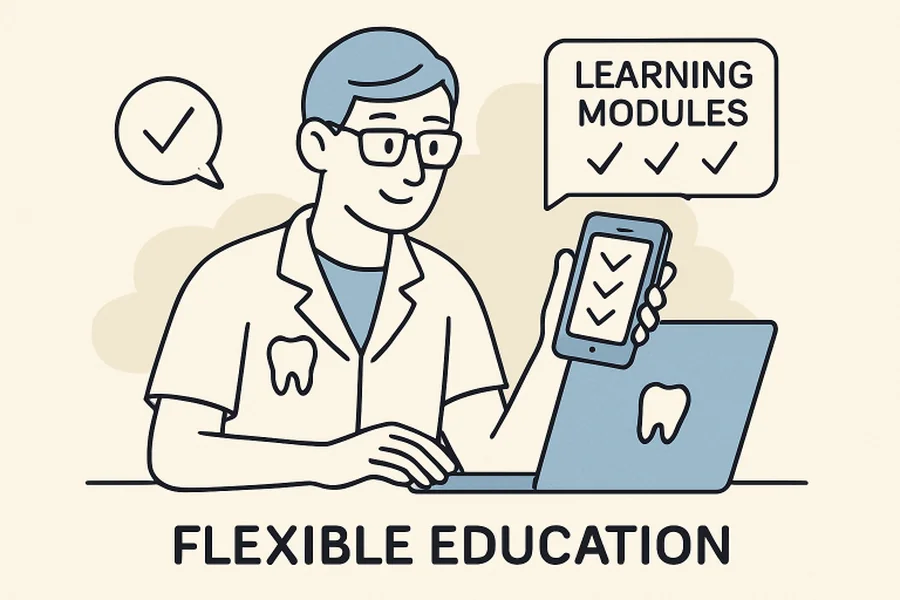
Hybrid learning models are revolutionizing continuing education for dental professionals by merging online modules with in-person, hands-on workshops. Digital platforms offer self-paced courses, enabling dentists to study interactive videos, complete assessments, and track progress anytime, anywhere. In-person sessions reinforce this digital foundation through real-world practice, allowing learners to refine their techniques, receive feedback, and collaborate with peers. The flexibility of the hybrid approach helps practitioners balance demanding work schedules with comprehensive knowledge and real-world clinical skills.
Microlearning
Microlearning offers short, focused lessons designed to fit into busy professionals’ schedules. This approach structures content into easily digestible segments, such as five‑minute videos, quick quizzes, or mobile‑friendly case studies, so that dental professionals can absorb new concepts without lengthy time commitments. By breaking down training into bite‑sized units, microlearning boosts engagement and knowledge retention, making it an effective way to keep skills sharp and learning manageable even between patients’ appointments. According to a comprehensive guide on eLearning Industry, microlearning is especially beneficial because it delivers targeted learning quickly, supports repeated study for better retention, and can be tailored with multimedia and assessments to reinforce learning goals, all while respecting learners’ limited time and attention spans. By focusing on specific topics, such as sedation protocols or periodontal techniques, microlearning makes it easy for dentists to refresh their knowledge and stay up to date with emerging best practices.
Several studies have shown that microlearning can improve knowledge retention and engagement compared to traditional lecture-based education. For example, implementing brief, scenario-based lessons before a challenging procedure can help reinforce proper protocols, ultimately improving patient outcomes.
Gamification
Gamification transforms the process of continuing education by embedding game mechanics into learning experiences. CE courses that utilize leaderboards, point systems, badges, and scenario-based simulations inspire competition and curiosity, making complex subjects more approachable. For dental professionals, simulated patient cases, interactive treatment planning, and diagnostic challenges replicate clinical situations and encourage critical thinking.
This approach not only increases participation but has also been linked to better knowledge retention and practical skill development. As dental professionals navigate these educational “games,” they receive instant feedback and new learning incentives, keeping their growth on track and meaningful.
Learning Paths
Continuing education is most impactful when tailored to an individual’s practice profile and aspirations. Personalized learning paths allow dental professionals to select topics, specialties, and skills that align with their interests and areas needing improvement. Whether focusing on pediatric sedation, new restorative materials, or practice management, these customized educational tracks guide professionals through modules that lead to certification or mastery.
This data-driven approach relies on assessments and learner input to curate targeted content, reducing time spent on redundant material and maximizing knowledge gains. By prioritizing relevance and practical application, personalized paths contribute to more effective and rewarding professional development.
Interactive Webinars and Workshops
Live webinars and virtual workshops have become vital components of dental CE, offering interactive, engaging ways to access expert-led instruction. With features like real-time Q&A, panel discussions, and breakout rooms, these sessions foster community and collaboration regardless of location. Dental professionals can participate remotely, ask questions directly, and connect with colleagues and industry leaders to enrich their educational experience.
Workshops provide hands-on learning opportunities, either virtually or in person, that simulate clinical scenarios and offer immediate feedback. This social, interactive format not only improves knowledge transfer but also builds networks and mentorships within the dental community. A growing number of dental organizations are launching these platforms in response to practitioner demand for more flexible, accessible CE options.
Reflective Practice
Encouraging self-assessment and critical reflection is another innovative layer in continuing education. Methods such as journaling, presenting case studies at study clubs, or participating in guided group discussions enable practitioners to evaluate past clinical experiences and adjust practices based on insights gained. This cycle of continuous self-improvement connects theory with real-life patient outcomes and promotes lifelong learning habits.
Reflective practice also nurtures adaptability and problem-solving, preparing dental teams to respond effectively to evolving patient needs and new professional challenges.
Specialty-Specific Courses
As dentistry grows more specialized, targeted CE courses address the nuanced requirements of each field—from prosthodontics to oral surgery, endodontics, and beyond. Specialty-specific programs dive deep into current research, advanced procedures, and emerging technologies relevant to each practice area, ensuring competence and compliance with specialty board guidelines.
For dental professionals seeking to expand their clinical repertoire, these courses offer both foundational theory and procedural expertise. Connecting to specialty societies and reputable academic institutions guarantees content is evidence-based and reflects the latest in dental innovation.
Embracing new models of continuing education enriches dental careers, sustains clinical excellence, and fuels a culture of continuous advancement. By integrating modern CE strategies, dental professionals stay agile, knowledgeable, and equipped to deliver top-quality patient care in a rapidly changing healthcare environment.